The Ultimate Guide to Fried Rice Around Asia
Fried rice may look simple, but across Asia, it can be anything but ordinary. Explore different types of fried rice you can order on Springroll.
Read more
Fried rice may look simple, but across Asia, it can be anything but ordinary.
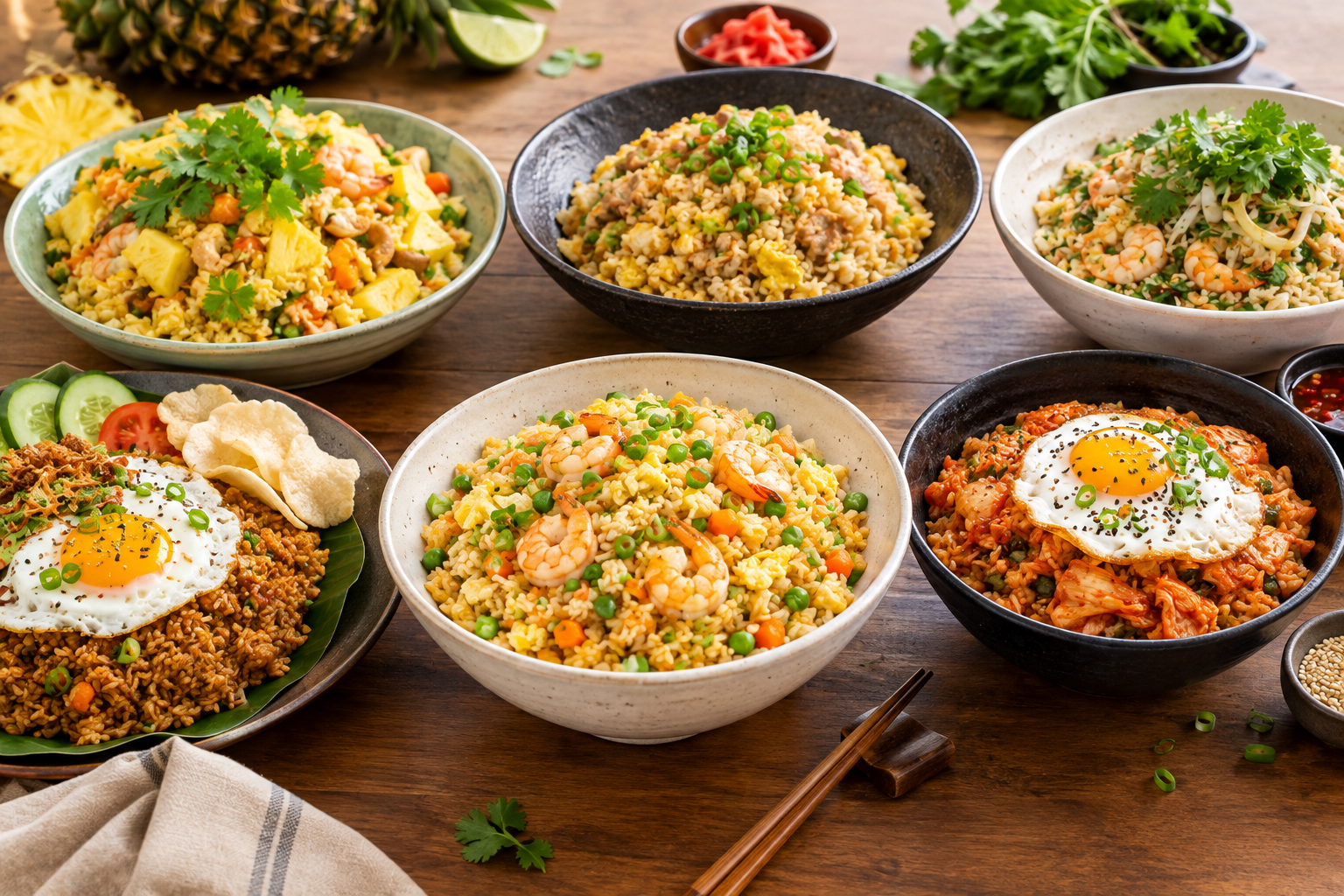
A hot wok or pan, cooked rice, a little oil, and a handful of ingredients can create completely different dishes depending on where you are. In China, fried rice can be delicate and savory, with distinct grains, eggs, vegetables, seafood, or diced meats. In Thailand, jasmine rice takes on bright, aromatic flavors. In Indonesia, nasi goreng is often seasoned with sweet soy sauce, chilies, and other bold ingredients. In Korea, kimchi turns fried rice into a spicy, tangy comfort food, while in the Philippines, garlic is the star of sinangag.
That variety is what makes fried rice so interesting.
Although fried rice has deep roots in Chinese cooking, the technique has spread throughout Asia and evolved alongside local ingredients, tastes, and cooking traditions. Today, you'll find fried rice in many forms, from everyday home cooking to restaurant specialties and street food.
If you're ready to look beyond the standard chicken fried rice on your usual takeout order, here's your guide to some of the most popular fried rice dishes around Asia.
At its heart, fried rice is a practical dish.
Cooked rice is stir-fried and combined with ingredients such as eggs, vegetables, meat, seafood, aromatics, and seasonings. Previously cooked rice is commonly preferred because chilled, drier grains are less likely to become mushy when stir-fried.
The type of rice, seasonings, aromatics, proteins, and garnishes can vary considerably from one cuisine to another. Even the way the rice is seasoned can completely change the finished dish.
In Chinese cooking, high-heat wok cooking can contribute to wok hei, a Cantonese term often translated as the "breath of the wok." It refers to the characteristic aroma and flavor that can develop when ingredients are cooked properly in a very hot wok.
Different regional styles emphasize different characteristics:
● Chinese fried rice often focuses on distinct grains, balanced seasoning, and wok-cooked aromas.
● Thai fried rice commonly uses fragrant jasmine rice and a combination of savory, aromatic, and fresh flavors.
● Indonesian nasi goreng is often darker and more intensely seasoned, especially when kecap manis and chili-based seasonings are used.
● Korean fried rice can get its signature character from fermented kimchi and other Korean seasonings.
This is why ordering fried rice from different Asian restaurants can feel like trying completely different dishes altogether.
When many people hear "fried rice," Chinese fried rice is probably the first version that comes to mind.
Known as chǎofàn in Mandarin, Chinese fried rice comes in many regional styles. The exact ingredients vary, but common versions include cooked rice stir-fried with eggs, vegetables, scallions, meat, shrimp, or other seafood.
One of the defining characteristics of many Chinese fried rice dishes is texture. The grains are generally kept separate rather than forming one sticky mass. Seasoning can also be relatively restrained compared with some Southeast Asian versions. Soy sauce, scallions, garlic, white pepper, sesame oil, and other seasonings may be used to add depth without overwhelming the rice.
For a deeper look into regional Chinese flavors, check out Springroll's 6 Regional Chinese Cuisines You Should Know (and What to Order).
One of China's best-known fried rice styles is Yangzhou fried rice, associated with Yangzhou in Jiangsu Province.
Yangzhou fried rice commonly combines rice with egg, shrimp, diced pork or ham, vegetables, and scallions. The ingredients are cut into relatively small pieces and combined so that no single ingredient completely dominates the dish. The result is a colorful fried rice with a balanced, savory character.
Japan has its own beloved version of fried rice, commonly called chahan or yakimeshi.
Chahan developed in Japan from Chinese-style fried rice and became part of chūka ryōri, Japan’s Chinese-style cooking. Today, it is a familiar dish in Japanese homes and restaurants, including ramen shops.
Chahan can include rice, egg, green onions, vegetables, diced pork such as chashu, shrimp, crab, or other ingredients depending on the recipe.
One of the appealing things about chahan is its versatility. It can be served as a standalone dish or as a side alongside foods such as ramen and gyoza.
Explore more seasonal Japanese cuisine with Springroll's Fresh Japanese Dishes to Try This Season.
Korean fried rice, known as bokkeumbap (bokkeum refers to stir-frying and bap means cooked rice), takes fried rice in a bolder direction.
In kimchi fried rice, fermented kimchi is the star. The kimchi adds acidity, spice, saltiness, and umami to the rice, creating a bold and flavorful dish.
Kimchi bokkeumbap is often made with leftover rice and well-fermented kimchi. Depending on the recipe, it may include pork, beef, Spam, or another protein. A fried egg, sesame oil, scallions, sesame seeds, or dried seaweed can also be added as toppings or garnishes.
Korean tabletop meals can also feature other forms of fried rice made by stir-frying rice with leftover meats, vegetables, sauces, or kimchi after the main part of a meal. These preparations are related to the broader Korean tradition of bokkeumbap.
Thailand has its own classic fried rice known as khao pad.
Thai fried rice commonly uses fragrant jasmine rice along with egg, vegetables, aromatics, and a choice of protein such as chicken, shrimp, pork, or crab. Fish sauce and soy sauce may be used for seasoning, while garlic, chilies, lime, scallions, or other fresh ingredients can contribute additional flavor.
Discover more Thai staples in Springroll's guide to Thai Rice Dishes You Need to Try.
Thai pineapple fried rice, known as khao pad sapparot, combines fried rice with pineapple and is often paired with ingredients such as shrimp or chicken, cashews, vegetables, and Thai seasonings.
Some recipes also include raisins or curry powder, while some restaurants serve the dish in a hollowed-out pineapple. These additions and presentations vary by recipe and restaurant.
The combination of savory fried rice and sweet pineapple gives this variation a distinctly different character from more traditional savory fried rice dishes.
Nasi goreng is one of the most recognizable fried rice dishes in Southeast Asia and is particularly associated with Indonesian cuisine. Variations are also common in Malaysia, Singapore, Brunei, and other parts of the region.
Indonesian versions are often darker and more intensely seasoned than many Chinese-style fried rice dishes. Kecap manis, a thick sweet soy sauce, is commonly used and can give the rice a deep color and sweet-savory flavor.
Depending on the regional style and recipe, nasi goreng may also include garlic, shallots, chilies, shrimp paste, chicken, prawns, vegetables, and a fried egg. Because there are many variations, there is no single ingredient list that applies to every nasi goreng.
Malaysia and Singapore have their own fried rice traditions, reflecting the region's diverse culinary influences.
In Malaysia, nasi goreng kampung, or "village-style fried rice," is a popular variation that may include ingredients such as anchovies, water spinach (kangkung), chilies, and shrimp paste. Different cooks and regions have their own versions.
Singapore also has a long tradition of nasi goreng influenced by Malay and Indonesian culinary traditions. Regional versions may feature shrimp paste, dark or sweet soy sauce, egg, aromatics, and accompaniments such as cucumber and crackers.
Vietnamese fried rice, known as cơm chiên, provides another variation on the fried rice tradition.
The dish can be made with cooked rice, garlic, eggs, seasonings, scallions, vegetables, and proteins such as pork, sausage, shrimp, or other seafood. Fish sauce or soy sauce may be used for seasoning, depending on the recipe.
Vietnamese fried rice is highly adaptable, so ingredients and accompaniments can vary considerably. Some restaurant versions may be served with fresh vegetables, herbs, or dipping sauces that add brightness to the savory rice.
Love Vietnamese food? Read Springroll's guide to Vietnamese Noodle Soups Beyond Pho.
Filipino sinangag is proof that simplicity can be extraordinary.
The classic version focuses on garlic rather than a long list of mixed ingredients. Cooked rice is stir-fried with plenty of garlic and oil, often using leftover rice so the grains remain relatively dry and separate. Toasted garlic can add even more aroma and texture.
Sinangag is a staple component of Filipino breakfasts and is commonly served alongside fried eggs and savory proteins such as longganisa or tapa as part of silog meals.
Unlike many mixed fried rice dishes, classic sinangag keeps the focus on garlic and rice, making it an excellent example of how a small number of ingredients can create a distinctive dish.
When browsing an Asian restaurant menu online, fried rice may appear under categories such as Rice, Entrees, or House Specialties. Knowing some of the regional names can make navigating menus easier:
● Chinese: Look for Yangzhou Fried Rice or Chao Fan.
● Japanese: Look for Chahan or Yakimeshi.
● Thai: Search for Khao Pad or Pineapple Fried Rice.
● Korean: Look for Kimchi Bokkeumbap.
● Indonesian/Malaysian: Search for Nasi Goreng.
● Vietnamese: Search for Cơm Chiên.
● Filipino: Look for Sinangag or Silog meals.
Fried rice can work well as part of a larger takeout meal. Pair it with appetizers or side dishes that bring different textures and flavors to the table:
● Pair Chinese or Thai fried rice with spring rolls or other crisp appetizers. See Springroll's Ultimate Guide to Spring Rolls.
● Pair Korean or Japanese fried rice with dumplings such as gyoza or mandu. See Springroll's Ultimate Guide to Asian Dumplings.
Fried rice may have deep roots in Chinese cooking, but across Asia it has evolved into a diverse collection of dishes shaped by regional ingredients, seasonings, and cooking techniques.
The next time you order takeout, consider trying a regional specialty you haven't had before. It could be the garlic-forward simplicity of Filipino sinangag, the sweet-savory depth of Indonesian nasi goreng, the bright flavors of Thai khao pad, or the tangy kick of Korean kimchi bokkeumbap.
Ready to explore? Browse local Asian restaurants on Springroll.com, discover your next favorite dish, and place your order online for convenient pickup or delivery where available.